 My Beast
Discounts and news by email. Unsubscribe in one click.
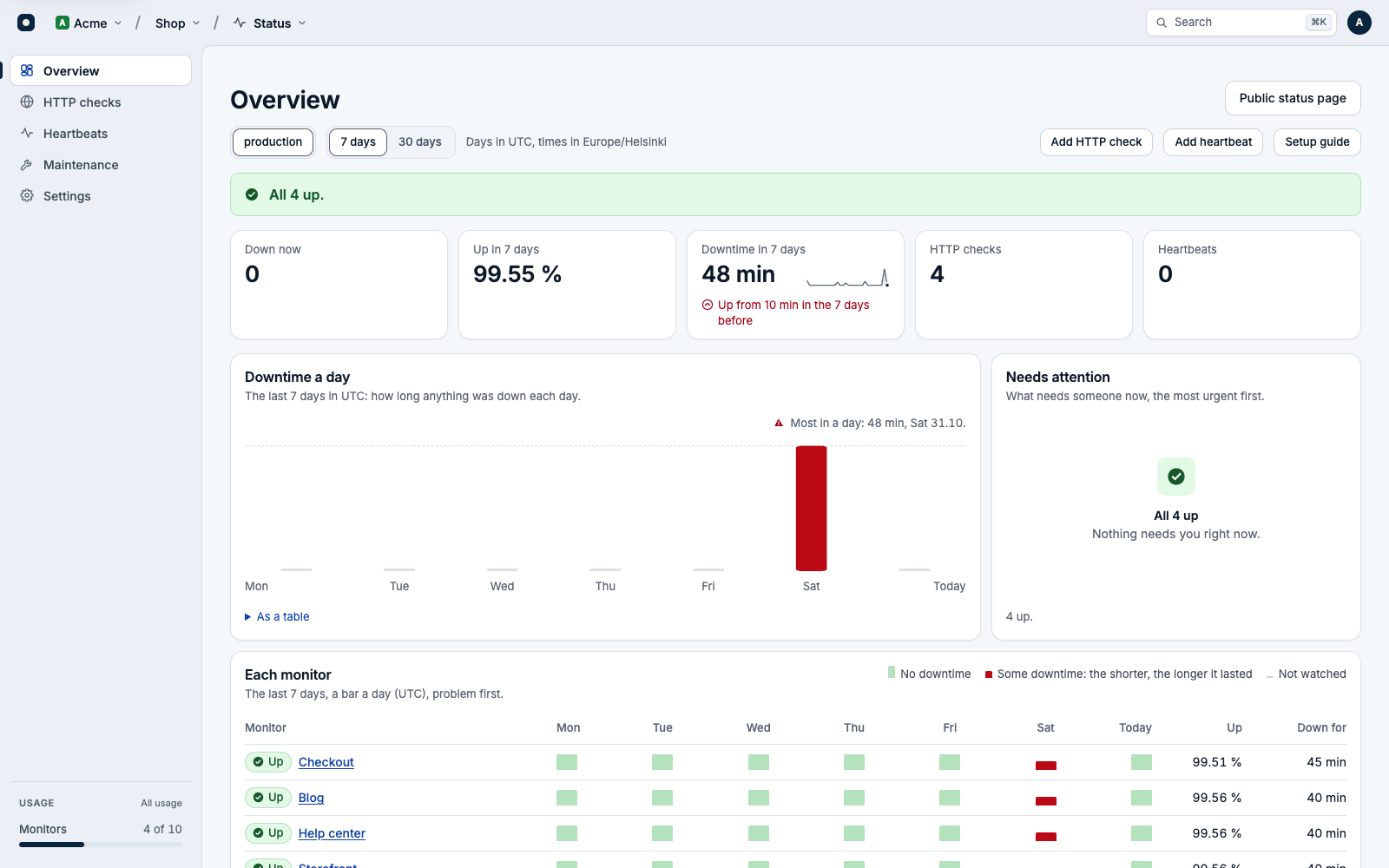
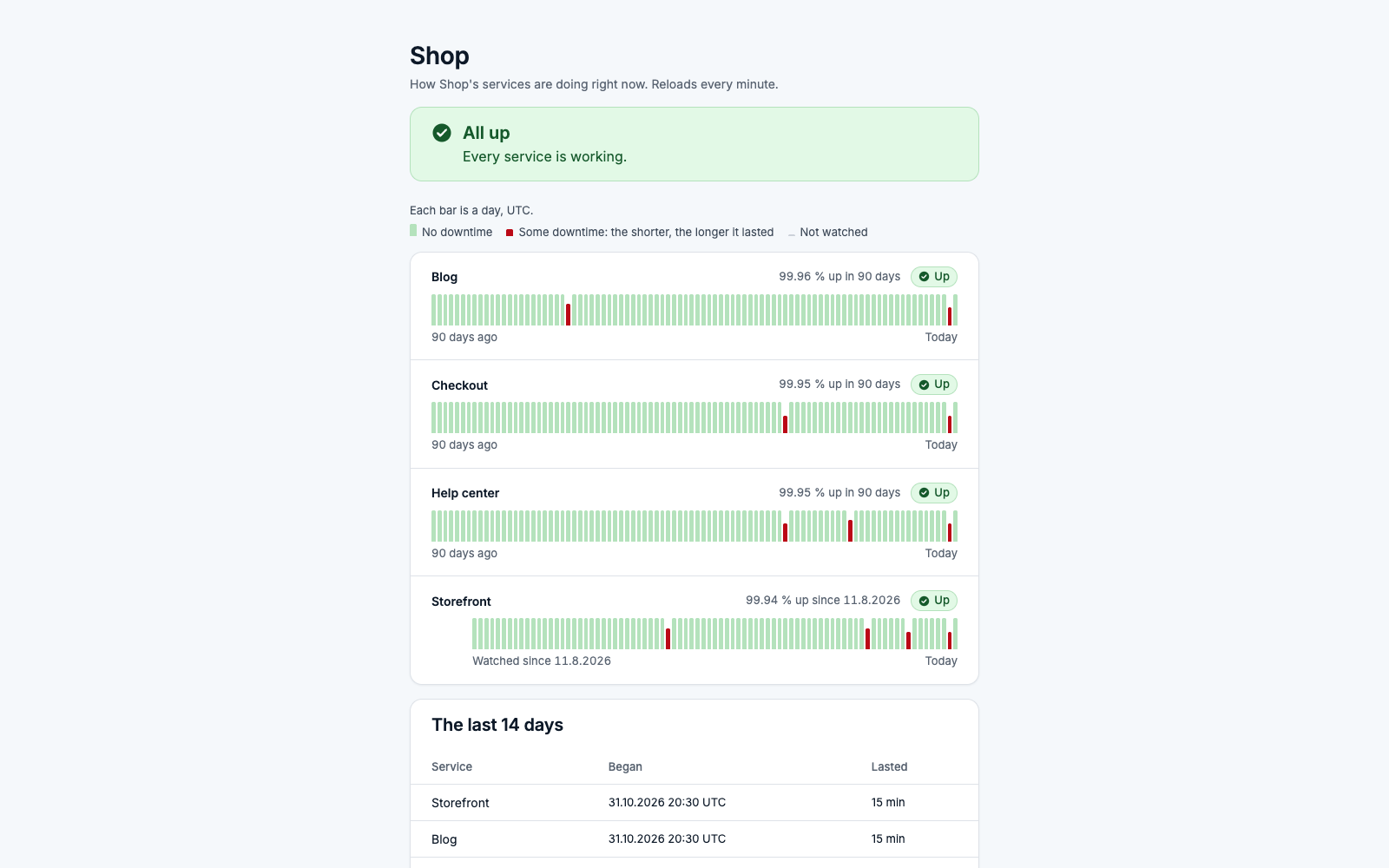
Status calls your addresses as often as your plan allows, from every 5 minutes to every 30 seconds, and waits for your jobs to check in. When a monitor goes down, your team is told by email, Telegram or Slack, and your webhooks hear it too. A public page shows the monitors you choose.
For operations, developers and support.
You sign up and pay for Status separately from hosting.
Prices are without VAT: VAT is added at checkout, where it applies. Plans renew each month or year until you cancel. Ask within 30 days of your first payment, or 14 days of a renewal, and you get it back in full. Sold by our reseller Paddle, which handles payment, VAT and invoices. Terms · Refunds
Pick Status and a plan, name your project and pay.
Give an address to check and how often, or make a heartbeat and call its address from your job.
Your project's people get email. Add a Telegram chat, a Slack channel or a webhook endpoint in Settings, and send a test.
Mark the monitors your users may see as public. They show on your project's status page.
| Starter€6 a month€60 a year | Team€15 a month€150 a year | Business€39 a month€390 a year | |
|---|---|---|---|
| Monitors | 10 monitors | 50 monitors | 200 monitors |
| Checks at least every | 300 seconds | 60 seconds | 30 seconds |
A new monitor past the plan's limit is refused, by hand or from a deploy, and the ones you have keep being checked.
A ping keeps its time and whether the job succeeded; a job that sends its output with the ping has its last 10 KB kept with it. A failed check keeps the start of the answer it got, for its page. The public status page shows names and states, never addresses. A Telegram bot token, a Slack webhook and each webhook secret are kept encrypted.
A new monitor past your plan's limit is refused, whether you add it by hand or a deploy sends it. A list that swaps one monitor for another still fits. The monitors you have keep being checked, and a smaller plan takes none away.
There is no free plan and no test mode. Settings → Who gets told has "Send a test alert", and each webhook endpoint has "Send a test", so you can see an alert arrive before anything goes down.
Any. Status checks any public http or https address, and a heartbeat is one call to its address: curl in a cron, or any language. To keep monitors in code, a deploy sends them to PUT /status/api/v1/monitors with a server secret.
On our servers in Germany. Each check's result is kept for 30 days, and webhook deliveries with it. Each day's uptime figures and every change between up and down are kept with no end date, for the uptime figures and the 90-day bar.
A failed check is made again 15 seconds later. A second failure marks the monitor down, and your people are told in the same run. A heartbeat is down once it is later than its period and its grace.
From our servers in Germany, all from one place. A customer's monitor calls public addresses only, and does not follow a redirect to one that is not.